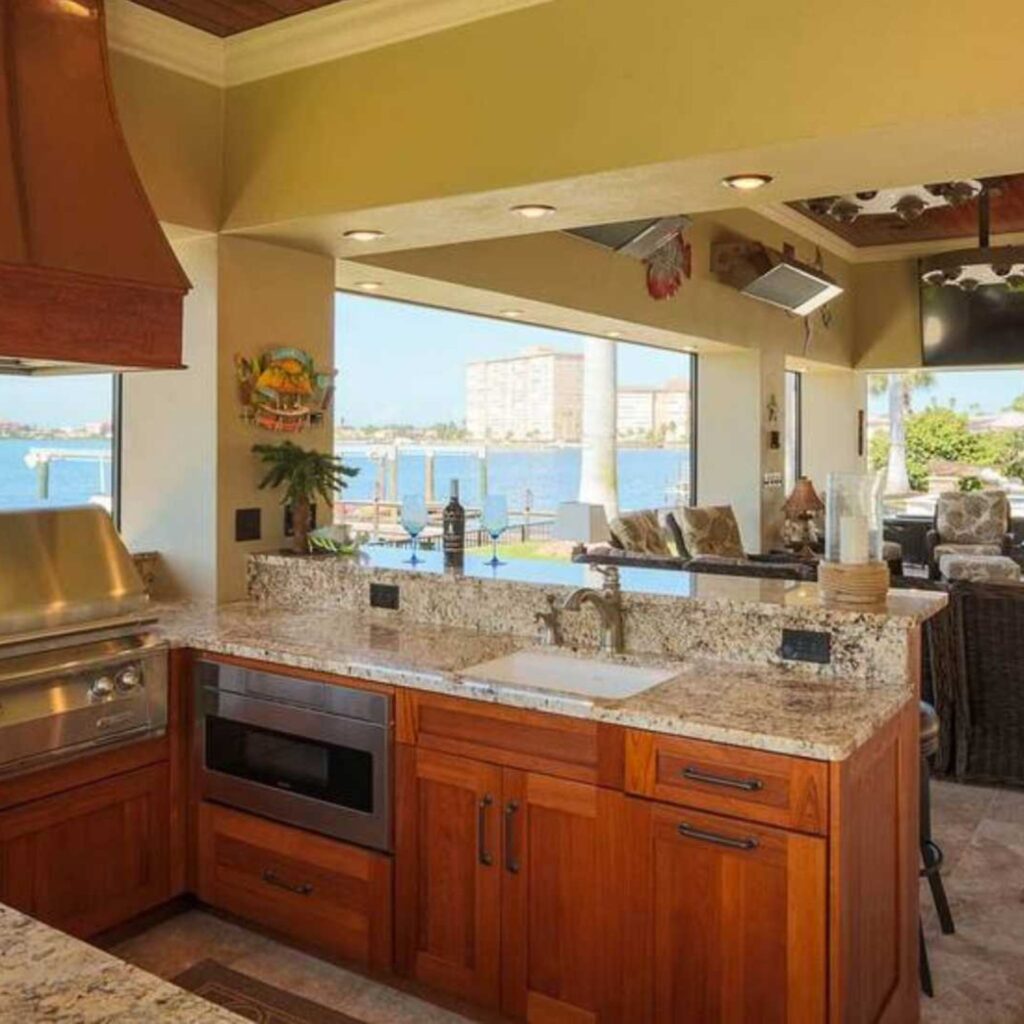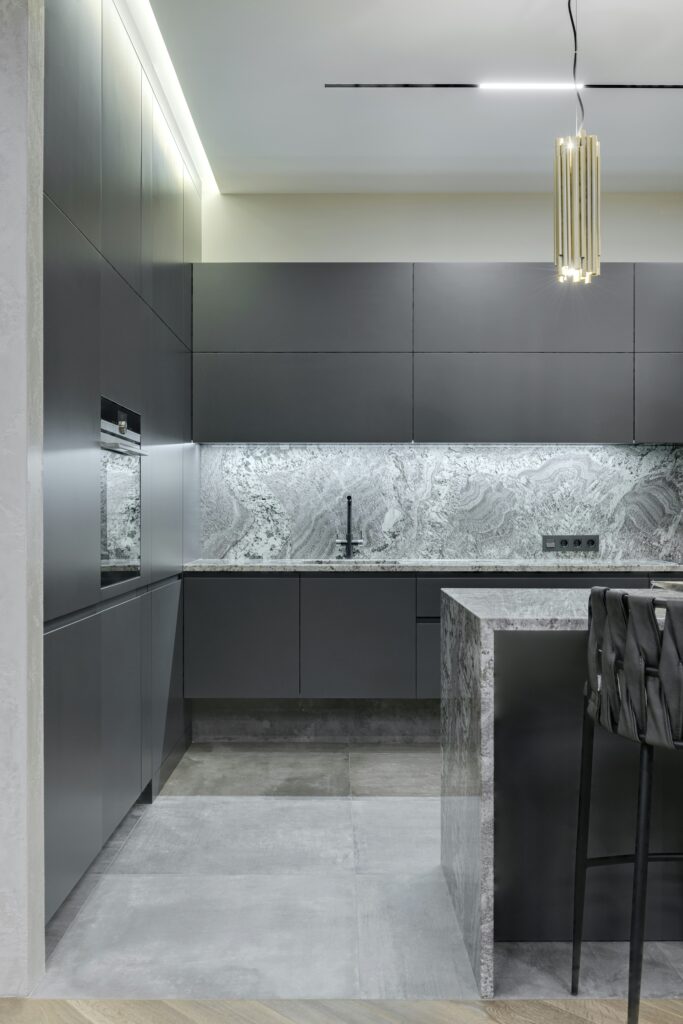
You’ve narrowed it down to two natural stones. Both look right on the sample board, both have been in kitchens for centuries, and both are sitting in your browser tabs right now. The granite vs. marble decision is one of the most common forks Tampa Bay homeowners hit during a kitchen or bathroom remodel — and it’s worth slowing down to get it right.
These two materials look similar at a glance but behave very differently in daily use. Here’s what you actually need to know.
Two Very Different Natural Stones
Granite and marble are both natural stone, but they form through completely different geological processes — and that origin story shapes everything about how they perform.
Granite is igneous rock. It forms when molten magma cools slowly deep underground, creating a dense, interlocked crystal structure. That process gives granite its characteristic speckled or granular appearance and its reputation for toughness.
Marble is metamorphic rock. It starts as limestone and gets subjected to intense heat and pressure over millions of years, which recrystallizes the calcium carbonate into those flowing veined patterns marble is known for. That same process also makes it softer and more reactive to acids than granite.
Both are quarried from the earth, cut into slabs, and fabricated to fit your space. But once they’re on your countertop, they ask very different things of you.
Durability: How Each Stone Holds Up in a Real Kitchen
Granite: Hard and Forgiving
Granite ranks 6–7 on the Mohs hardness scale, which puts it comfortably above most kitchen hazards. You can set a cast iron skillet directly on it without scratching the surface. It handles the heat, the dropped pots, and the daily grind of a busy kitchen without much complaint.
It is porous, though. Granite absorbs liquids if left unsealed, which means red wine, olive oil, or citrus juice sitting on an unprotected surface can work its way in. The fix is straightforward: reseal every 1–2 years with a penetrating stone sealer, and you’re covered.
In Tampa Bay’s humid climate, that sealing schedule matters more than it would somewhere drier. Moisture in the air won’t damage sealed granite, but it’s a good reminder to stay on top of it.
Marble: Beautiful, But Softer Than You Think
Marble sits at 3–5 on the Mohs hardness scale — significantly softer than granite. That gap matters in a kitchen. Marble scratches more easily, and it etches when it contacts acidic substances like lemon juice, vinegar, or certain cleaning products. Etching isn’t a stain — it’s a chemical reaction that dulls the surface finish, leaving a lighter, matte spot where the acid made contact.
Marble benefits from a quality modern impregnating sealer for stain resistance. Follow the instructions for the actual stone, finish and product rather than assuming resealing every six to twelve months. Sealing does not prevent acid etching; a honed finish can make light etching less noticeable.
We welcome marble in working kitchens. Its depth and veining are reasons to choose it, with a clear understanding of the finish and a few light care habits.
Maintenance: What You’re Actually Committing To
Granite: Manageable and Infrequent
Day-to-day granite care is simple. Wipe it down with mild soap and water, avoid harsh cleaners that can strip the sealant, and reseal once a year or so. A quick water bead test tells you when it’s time — if water soaks in instead of beading up, reseal.
For Tampa Bay homeowners who cook frequently or run high-traffic kitchens in places like Brandon or Wesley Chapel, granite’s low-maintenance profile is a real advantage. It doesn’t need babying between sealing sessions.
Marble: More Involved, Worth Knowing Upfront
Marble care can be straightforward: wipe spills promptly, use a cutting board and trivet, and clean with a pH-neutral stone cleaner. A quality modern sealer improves stain resistance, but acids can still etch the finish. Follow the sealer’s own instructions instead of a blanket annual resealing rule.
Plenty of Tampa Bay homeowners in Sarasota and St. Petersburg choose marble for working kitchens as well as bathrooms and powder rooms. Its character belongs in spaces people enjoy every day.
Aesthetics: What Each Stone Actually Looks Like
Granite: Varied, Earthy, and Versatile
Granite’s look ranges widely — from fine-grained blacks and grays to bold blues, greens, and multi-toned earth tones. The speckled pattern comes from the interlocked mineral crystals (quartz, feldspar, mica) that formed during cooling. No two slabs are identical, but the variation tends to be more subtle and distributed than marble’s dramatic veining.
Granite plays nicely with both traditional and transitional kitchen designs. In Tampa Bay’s coastal aesthetic, lighter granites in creams and grays pair well with white cabinetry and natural wood tones.
Marble: Distinctive Veining, Timeless Look
Marble’s veining is its signature. The flowing lines of Carrara or the bold contrast of Calacatta are hard to replicate — and engineered quartz brands have spent years trying to do exactly that. The real thing has a depth and variation that photos can’t fully capture.
Marble reads as classic and refined. It fits well in bathrooms, butler’s pantries, and kitchens where the design intent leans more formal or European. Along the Gulf Coast from Clearwater to Bradenton, marble shows up frequently in higher-end renovations where the look is the priority.
Where Each Stone Works Best in Your Home
Not every room asks the same thing of a countertop. Matching the material to the application is where a lot of people get this decision right — or wrong.
Granite works well in:
- Primary kitchen countertops, especially in high-use cooking spaces
- Outdoor kitchens (granite handles UV and humidity better than marble)
- Laundry rooms and utility spaces
- Any application where daily durability matters more than dramatic aesthetics
Marble works well in:
- Bathroom vanities and powder rooms
- Fireplace surrounds
- Working kitchens and kitchen islands
- Spaces where its depth and veining suit the design
If you’re weighing other natural stone options alongside these two, quartzite is worth a close look — it offers marble-like veining with granite-level hardness, which makes it popular with Tampa Bay homeowners who want the aesthetic without the acid sensitivity.
How to Decide: Three Honest Questions
How do you actually use your kitchen? Both granite and marble belong in working kitchens. Granite offers greater acid resistance; marble offers luminous depth and distinctive veining. For marble, a quality modern sealer and light practical precautions support everyday use, while acids can still etch.
Where is this countertop going? Marble works beautifully in kitchens, bathrooms and powder rooms. Choose the slab and finish for the space, then ask for a clear care plan rather than ruling it out because the room is busy.
What care routine suits you? Marble does not need to be treated as a showpiece. Wipe spills promptly, use a cutting board and trivet, and follow the instructions for a quality sealer. Resealing depends on the product and stone, not an automatic yearly appointment.
If you’re still comparing natural stone to engineered options, our breakdown of granite vs. quartz countertops covers that decision in detail.
What Tampa Bay Homeowners Are Actually Choosing in 2026
Granite remains the more popular pick for primary kitchen countertops across the Tampa Bay Metro. The durability, the price range, and the low-maintenance profile make it a reliable choice for busy households. If you want to dig into slab selection and what’s trending locally, our granite countertops guide for the Tampa Bay area is a good next read.
Marble belongs in bathrooms, islands and full working kitchens where its depth and veining suit the design. Modern quality sealers and light precautions support that choice without promising a stain-proof or acid-proof surface.
Both materials perform well in Tampa Bay’s real estate market. Buyers across Hillsborough, Pinellas, Sarasota, and Manatee counties respond to natural stone. Either choice, maintained properly, holds its value.
See Both Materials in Person Before You Decide
Photos don’t do either stone justice. Granite’s depth and marble’s veining read completely differently when you’re standing in front of a full slab. If you’re in the Tampa Bay metro area and want to compare your options side by side, visit the Granite Plus showroom to view 9-foot-tall, countertop-width samples on our rolling tray walls, or speak with one of our stone specialists about what works for your specific space and budget. Full slabs are viewed at our preferred stone yards. You can get started at granite-plus.net.